Guide
How to Master Savoury Cooking with Edible Flowers
Edible flowers are often relegated to cake decoration, but their diverse flavor profiles—ranging from peppery to citrusy—can transform savoury dishes. This guide explores how to integrate botanical elements into modern European cuisine through temperature-controlled infusions and texture-focused plating.
Understanding Floral Flavor Profiles
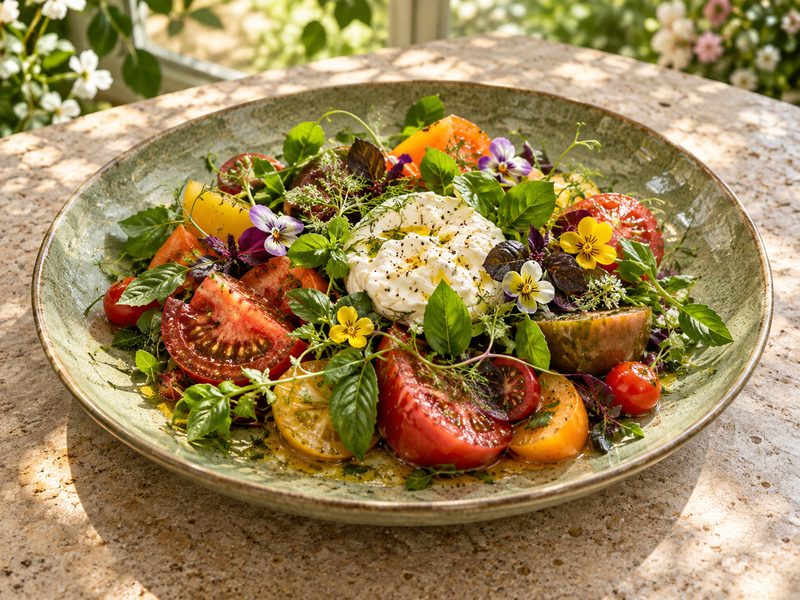
In savoury cooking, edible flowers should be treated as functional ingredients rather than mere garnishes. Nasturtiums provide a sharp, peppery kick similar to watercress; borage offers a cooling cucumber note; and marigolds (specifically Tagetes) can introduce a citrusy, slightly bitter profile. Before cooking, always taste a petal to identify its primary note—bitter, sweet, or spicy—and pair it with a contrasting element, such as a rich fat or a bright acid.
The Preparation and Storage Phase
To keep flowers at their peak, harvest them in the cool of the morning. Submerge them briefly in a bowl of ice-cold water to remove any garden debris or insects, then spin them dry very gently in a salad spinner lined with paper towels. Store them in an airtight container with a slightly damp paper towel at 4-6°C. Most delicate flowers like pansies or violas will last 2-3 days, while hardier blooms like nasturtiums can last up to five.
Technique: The Floral Infusion
To incorporate deep floral notes into a dish without the texture of raw petals, use a fat-based infusion. For a modern European approach, gently heat 100g of high-quality unsalted butter or extra virgin olive oil to exactly 60°C. Add a handful of cleaned blossoms (such as chive flowers or marigolds) and allow to steep for 20 minutes. If you don't have a sous-vide circulator, use a small heavy-bottomed saucepan over the lowest possible heat with a digital probe thermometer to ensure the temperature does not exceed 65°C, as high heat will turn floral notes bitter.
Recipe: Garden Radishes and Asparagus with Nasturtium Emulsion
This recipe focuses on the synergy between crisp vegetables and peppery florals. Begin by poaching 200g of trimmed asparagus and 100g of halved breakfast radishes in simmering salted water for exactly 2.5 minutes until tender-crisp. Immediately shock them in ice water to set the color. For the emulsion, whisk together 1 tablespoon of white balsamic vinegar, a pinch of sea salt, and 3 tablespoons of your nasturtium-infused oil (prepared as described above).
Plating and Texture
Smear 100g of whipped, seasoned ricotta onto the center of a chilled plate to act as a base. Arrange the vegetables on top, focusing on vertical height. Drizzle with the nasturtium emulsion and finish with fresh nasturtium leaves and petals, toasted sunflower seeds for crunch, and a final grating of lemon zest. The heat from the vegetables (if served warm) or the acidity of the dressing will release the volatile oils in the fresh petals, creating a fragrant, garden-inspired experience.